

Orthopedic Acupuncture for Sciatica: An Effective Pain Relief Method
- Dr. Guadalupe Vanderhorst Rodriguez

- 7 days ago
- 5 min read
Orthopedic Acupuncture for Sciatica: An Effective Pain Relief Method
If you have ever experienced sciatica, you know that it can be much more than an occasional ache in your lower back.
Sciatic pain can travel from the lower back or buttock down the back or side of the leg, sometimes reaching the calf, ankle, or foot. For some people, it feels like burning. For others, it may feel sharp, electric, tingling, numb, or deeply aching.
And when sciatica becomes chronic, it can affect much more than your back.
It can interfere with sleep, walking, exercise, work, travel, and the simple activities that once felt effortless.

The good news is that conservative, non-surgical approaches may help many people manage sciatica. One approach receiving increased research attention is acupuncture.
Orthopedic acupuncture takes this a step further by combining acupuncture with a detailed understanding of musculoskeletal anatomy, movement, muscles, joints, and nerve pathways.
What Is Sciatica?
Sciatica describes pain and other neurological symptoms associated with irritation or compression of the sciatic nerve or the nerve roots that contribute to it.
The sciatic nerve is the largest nerve in the human body. It originates from nerve roots in the lower spine and travels through the buttock and down the leg.

One of the most common causes of sciatica is a lumbar herniated disc that irritates or compresses a spinal nerve root. Other potential causes include spinal stenosis and degenerative changes in the lumbar spine.
Research published in JAMA Internal Medicine notes that lumbar disc herniation with lumbosacral nerve-root compression and inflammation may account for approximately 85% of sciatica cases.
Sciatica can also become persistent. The same research reports that among people with chronic sciatica, approximately 45% may not experience meaningful improvement after one year, while about 34% report chronic pain lasting beyond two years.
These numbers help explain why people living with sciatica often search for additional non-pharmacological options.
What Is Orthopedic Acupuncture?
Traditional acupuncture has been practiced for centuries and is rooted in the principles of Traditional Chinese Medicine.
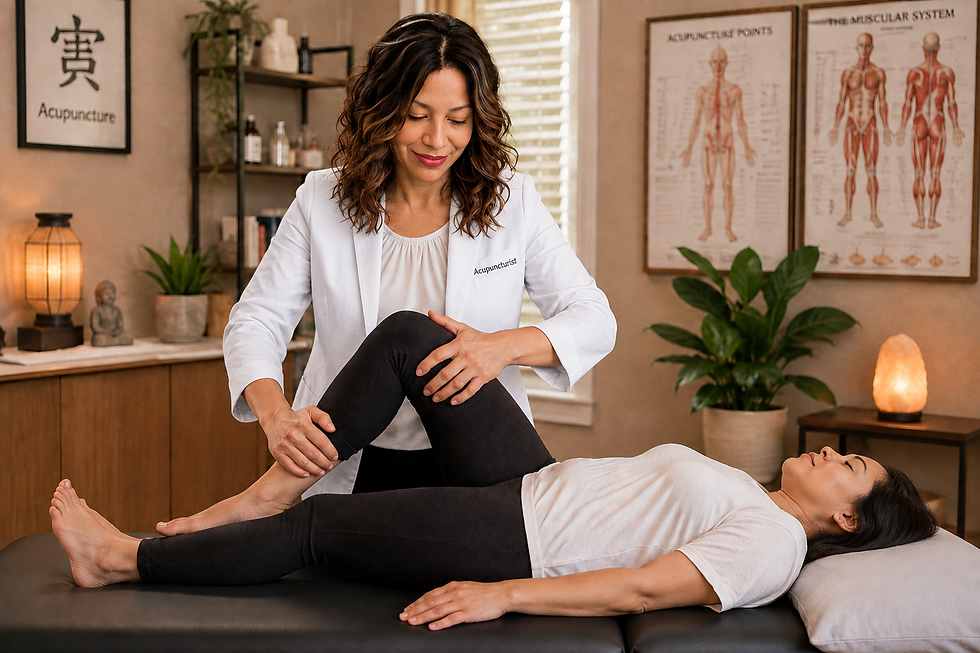
Orthopedic acupuncture uses acupuncture within a more musculoskeletal and anatomically focused framework.
Instead of focusing exclusively on where a person feels pain, an orthopedic assessment may consider:
Muscle tension and weakness
Joint mobility
Posture and movement patterns
Trigger and motor points
Areas of nerve irritation
Lumbar, hip, and pelvic involvement
The overall pattern of symptoms
This is important because two people can both say, “I have sciatica,” while experiencing very different underlying problems.
For example, one person's symptoms may primarily involve lumbar disc irritation, while another person's pain pattern may be influenced by muscular dysfunction around the hip and pelvis.
A thoughtful treatment plan therefore begins with understanding the individual—not simply treating the name of the condition.
What Does the Research Say About Acupuncture for Sciatica?
One of the most important recent studies was published in JAMA Internal Medicine in 2024.
Researchers conducted a multicenter randomized clinical trial involving people with chronic sciatica caused by a herniated disc. Participants were assigned to either acupuncture or sham acupuncture. The treatment group received 10 acupuncture sessions over four weeks.
The results were encouraging.
After four weeks, leg-pain scores decreased by an average of approximately 30.8 points on a 100-mm visual analog scale in the acupuncture group, compared with 14.9 points in the sham-acupuncture group.
Disability scores also improved. The Oswestry Disability Index decreased by approximately 13.0 points with acupuncture, compared with 4.9 points with sham treatment.
Perhaps even more interesting was the durability of the results.
The researchers reported that improvements in pain and function were still evident through the 52-week follow-up period. They concluded that acupuncture should be considered a potential treatment option for chronic sciatica associated with herniated disc.
This does not mean acupuncture will produce the same outcome for every person, nor does it mean that acupuncture can mechanically reverse every structural cause of sciatica.
It does, however, provide meaningful clinical evidence that acupuncture may have a role in reducing pain and improving function for some people with chronic sciatica.
How Might Acupuncture Help Sciatic Pain?
Pain is complex. It involves not only muscles and joints but also peripheral nerves, the spinal cord, the brain, inflammation, and the body's pain-regulating systems.
From a biomedical perspective, researchers have proposed several mechanisms through which acupuncture may influence pain, including modulation of nervous-system signaling and endogenous pain-regulating pathways.
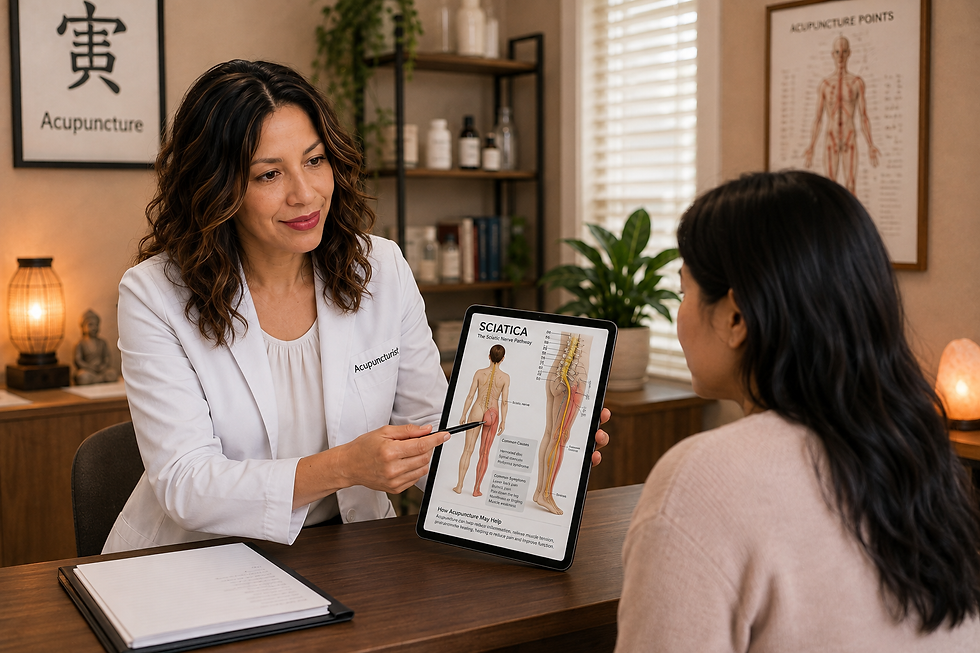
An orthopedic acupuncture treatment may also address muscular structures surrounding the lumbar spine, pelvis, buttocks, and legs when clinically appropriate.
The goal is not simply:
“Put a needle where it hurts.”
Instead, treatment is based on evaluating the larger musculoskeletal pattern contributing to the person's symptoms.
This distinction matters.
If pain is preventing you from sleeping, walking comfortably, exercising, gardening, traveling, or enjoying time with your family, reducing pain is only part of the goal.
Restoring function matters too.
Acupuncture Should Be Part of an Individualized Plan
Scientific guidance on acupuncture for sciatica is not completely uniform.
For example, the UK's National Institute for Health and Care Excellence (NICE) guideline for low-back pain and sciatica, originally published in 2016 and updated in 2020, recommends not offering acupuncture routinely for low-back pain with or without sciatica.
That recommendation predates the 2024 randomized clinical trial discussed above.
This is an important reminder that healthcare decisions should consider the totality of the evidence, the individual patient's diagnosis, current clinical guidelines, treatment preferences, risks, and response to previous care.
Acupuncture should also not delay appropriate medical evaluation.
Seek prompt medical attention if back or sciatic symptoms are accompanied by significant or progressive leg weakness, bowel or bladder changes, numbness around the groin or saddle area, fever, major trauma, unexplained weight loss, or other concerning symptoms.
A Different Way to Think About Sciatica
When you have been living with pain for weeks or months, it is easy for your life to begin revolving around what hurts.
You stop taking the walk.
You hesitate before getting into the car.
You wonder whether you will sleep tonight.
You may even begin planning your day around your pain.
That emotional burden is real.
An integrative approach to musculoskeletal health asks a different question:
What can we do to help you move toward greater comfort, function, confidence, and quality of life?
For some people, orthopedic acupuncture may be one component of that process, alongside appropriate medical care, therapeutic exercise, movement, rehabilitation, sleep, nutrition, and other evidence-informed strategies.
Discover Kicotan Wellness
At Kicotan Wellness, we believe wellness begins with understanding your body rather than simply reacting to symptoms.
Our approach brings together principles of acupuncture, Traditional Chinese Medicine, body awareness, movement, and holistic wellness education to help you better understand the relationship between pain, function, and everyday health.
If sciatica, back pain, or musculoskeletal discomfort has been interfering with the life you want to live, it may be time to explore a more comprehensive approach.
Learn more about Kicotan Wellness and discover educational resources designed to help you reconnect with your body, support healthy movement, and create a more balanced approach to wellness.
Visit Kicotan Wellness: www.kicotanwellness.com
Educational Disclaimer: This article is provided for educational and informational purposes only and is not intended to diagnose, treat, cure, or prevent any medical condition or replace individualized medical advice. Consult an appropriately licensed healthcare professional regarding persistent or severe pain and before beginning a new treatment program.
Scholarly References
Tu, J. F., Shi, G. X., Yan, S. Y., et al. (2024). Acupuncture vs sham acupuncture for chronic sciatica from herniated disk: A randomized clinical trial. JAMA Internal Medicine, 184(12), 1417–1424. doi:10.1001/jamainternmed.2024.5463.
National Institute for Health and Care Excellence. (2020). Low back pain and sciatica in over 16s: Assessment and management (NG59). NICE.
Anderer, S. (2024). Trial supports acupuncture for chronic sciatica pain. JAMA, 332(22), 1873. doi:10.1001/jama.2024.23051.


Comments